Showing posts with label Andrei Novac. Show all posts

Sunday, October 12, 2014

Designer Diary - Praetor (part II)

To read the first part of this designed diary please follow this link.

Praetor 1.1


Decreasing the number of tiles was an obvious choice. The game play was sound, but simply too long. Making less tiles of one kind (e.g. Gold Mines which would provide currency for players) did not decrease the number of choices, it simply made the game easier to grasp. The first “hair cut” left Praetor with less than 60 city tiles.

To avoid any scalability problems from the very beginning, I created a core set of about 25 city tiles which were used for the 2-player games and with each extra player several more tiles would be added. With each extra player there were more workers and more resources in the game and thus the play time would not increase significantly since more workers plus more resources meant faster building.

The one test I was the most afraid of was the first 6-player game. I knew that in theory the game should scale nicely, but I also knew that sometimes there’s a big difference between theory and practice. To increase the difficulty of the challenge even further, I chose a group of very casual gamers, people who would usually settle for game as complex as Monopoly. To my surprise, the game only took two hours and the feedback was overwhelmingly positive. Version 1.1 had passed its most difficult exam and the game was deemed ready for mass testing.

Nürnberg 2013 and the long months of testing


I had big doubts whether to present the prototype of Praetor to W Eric Martin of BoardGameGeek at the Nürnberg Toy Fair or not. I knew that showing a rough version with no graphic design could trigger negative opinions, but the team decided to go for it and see it would spark any interest. And it did!

Praetor 1.1 hex tile

It suddenly became a lot easier to find groups of testers and it also created the right expectations. People were playing an illustration-free game and they were giving feedback only to the game mechanisms which is exactly what I needed.

After I became convinced that the flow of the game is right, I added the last piece of the puzzle, the mechanism of tile placement. Every corner of each city tile was painted in one of four colors. When a player would build a new tile (district), he would also have to choose its place in the city. The more corners matched the neighboring tiles, the more extra points that player would get. It was another level of strategy and it also made the modular board look nicer, at least in my mind since there was not even a hint of illustration on the city tiles.

We took Praetor to a few small conventions and to the UK Games Expo in May 2013 and slowly drafted what looked like the final version. The last major decision was to limit the maximum number of player to 5. I won’t get into many details, it had a lot to do with the tradition in the industry, many games of this genre being limited to 4 or 5 players and a bit to do with adding diversity and limiting the chaos with a large number of players.

The last significant change in the game play was dropping the concept of initiative. At first, each tile would provide an amount of a resource called “initiative” which determined the order of play. This allowed the most developed player to play first in a subsequent turn, hence no catching-up mechanism. With the initiative out of the way, every turn the order of play was based on the number of favor points, from the lowest to the highest. I knew that it was a common thing in board games, but at that moment I felt like I discovered the wheel because the last shadow of concern related to the imbalance of the game disappeared.

Summer, public display and the first days of winter


We announced that we’d present Praetor in Spiel ’13 Essen quite long before we had any final graphics prepared. After extensive feedback, I was finally convinced to give up the hexes and use squares. The game play did not change, the tile placement mechanism became simpler and the work of the illustrator and graphic designer significantly easier. I had to accept that I was in love with my own concept and that I had to give up and embrace the fact that when many people tell you that you’re wrong it’s probably true.

One day last autumn I was chatting with a good friend on Skype and with a very casual voice he told me that he has heard of another game fresh on Kickstarter which employed “the same idea with worker which get experience”. I turned first red, than white, thinking that the last year of my life was in vain. How could this happen? Is the project dead? I don’t stress easily, but I must admit that I don’t remember much of those next ten minutes. I looked for the rules, browsed through, had a cold glass of water and ultimately calmed down. It was a different game (and I apologize for not even remembering the name, all I can recall is that it did well with its crowd-funding) and in my mind there could not be any sign of confusion. I finally replied with arrogance “great minds think alike” but I must confess that I had cold sweats just thinking that I took too long to design a game that I can be proud of and someone else beat me to it.

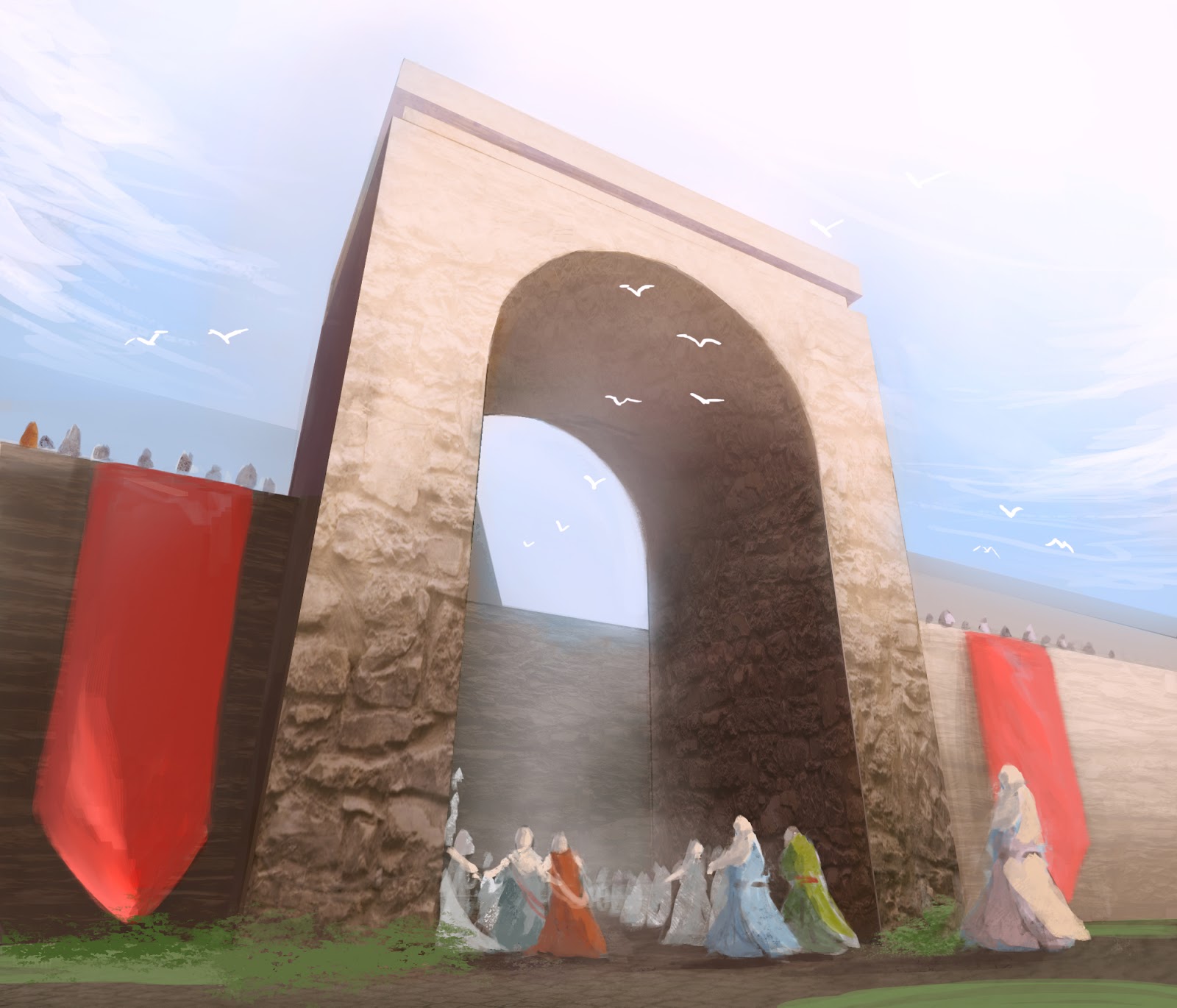

Illustration for Praetor City Tiles

Well, we made the deadline for Essen with all the illustration for the city tiles ready. On top of that, we increased the size of each city tile from 2.5 x 2.5 in to 3.2 x 3.2 in so the illustrations are more visible. Even as a prototype Praetor got a lot of attention and we had many offers from people willing to purchase our only prototype. I was convinced we were on the right track, so I spent the late autumn and the first days of winter working on the final rules and making sure that we’d have the final graphic design to complement the beautiful illustrations.

 Ready, Set, Go!

Praetor punchboards during the manufacturing process
In April 2014 we were able to touch the final product. With yet another graphic design update made by a professional designer, we released Praetor in seven languages and over 7500 copies, making it the largest title from NSKN Games to date.


__________________
FIND OUT MORE NSKN official website Facebook  | BGG
Follow us on Twitter: @NSKNGames

Thursday, October 9, 2014

Designer Diary - Praetor (part I)

I must start by confessing that I am an avid euro-gamer and that worker placement games rank very high in my preferences. It has been my dream as a board game designer to make such a game myself, one that will stand out between the many good games of this genre.
Praetor is a strategy game evolving around the worker placement mechanism, set in the Roman Britannia. Even though it is not the most complex game I have ever designed (that honor is still held by Exodus: Proxima Centauri), Praetor is the game I have been working on the longest and the game that got most of my attention over the past 18 months.

Ever since I started playing modern board games and fell in love with “euros”, I felt that one thing was constantly lacking, the fact that no matter how much I used a worker he would never gain any experience. It was always the same worker, no better and no worse than at the very beginning of the game. I thought to myself that this is one idea worth considering and if I would ever design such a game it would overcome this lack of realism in worker placement games.

Ancient history


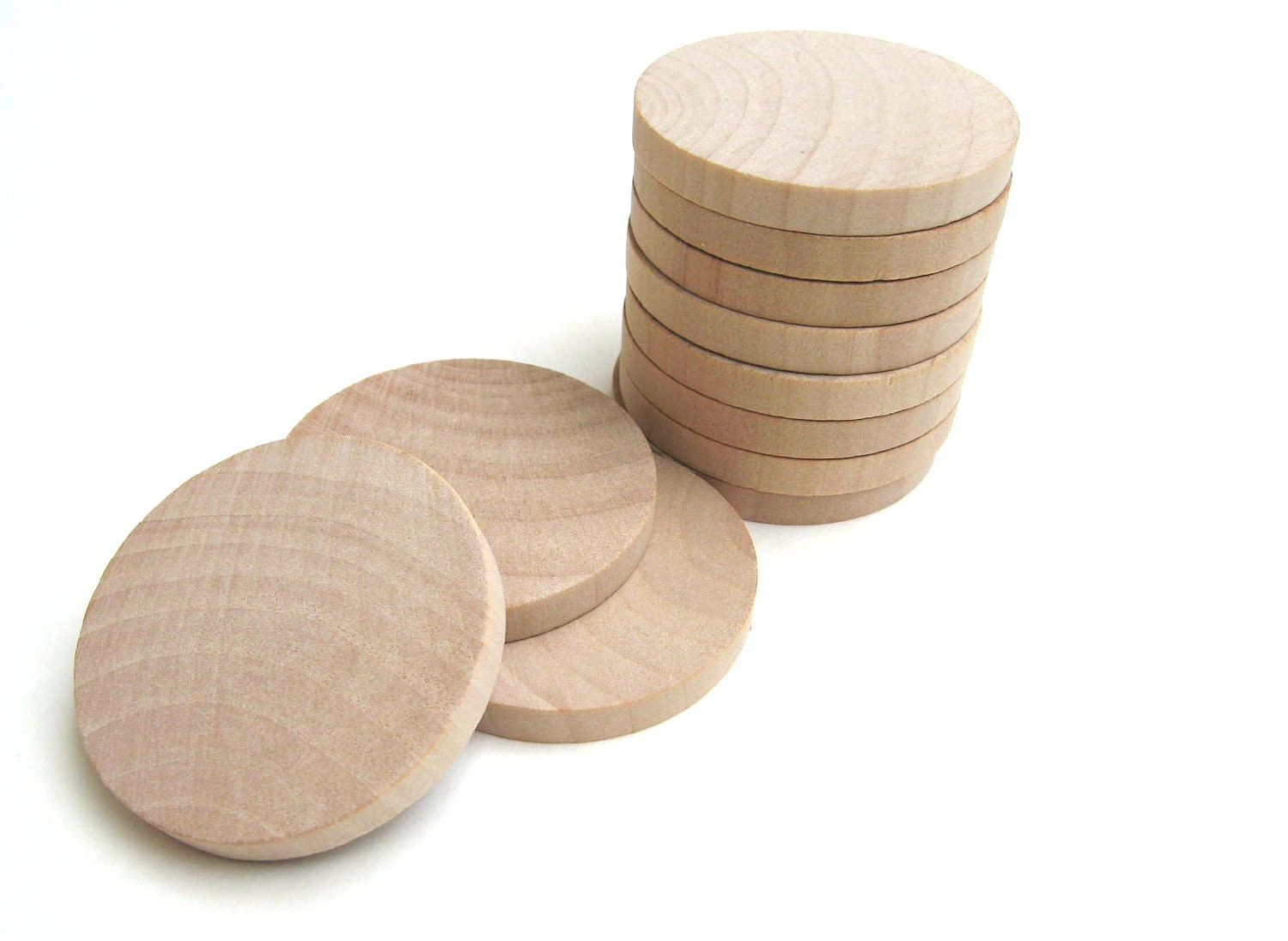
I started working on Praetor in August 2012 with this single idea in mind, to create a mechanism in which the workers would slowly gain experience. My first worker was represented by a fairly large wooden disc and his experience by additional wooden cubes. Don’t get scared just yet, seeing the ridiculous amount of parts a player would have to manage with just a pair of workers, I soon realized that there’s a reason for which in most games workers are wooden meeples or cubes or discs or, at best, plastic miniatures. I was not very proud of this initial idea so I chose to stay quiet and “forget” to share this even with the members of NSKN Games.

The first concept of experience (image source: etsy.com)

Shortly after dust had settled over Essen 2012 and the euphoria of such a great event, I realized that dice are the most elegant implementation for the experience of workers. My initial idea was to simulate real life and look for a non-linear evolution of the experience in time, but I did not want to push my luck and people mathematical skills above an acceptable limit. So, I went with the dice and I started building the whole game around them.

By December I had already figured out most of the concepts of the game. Since it all started with an abstract idea - workers gaining experience - I went along the same path and built the game around abstract concepts. The workers would help generate up to 5 – 7 resources which would be used to build “stuff”. Now, “stuff” was way too abstract and I went with the idea of buildings. In just a few days I had a list of 60 buildings which would all be tied together, allowing the exchange of resources for points, give special abilities and allow players’ workers to gain experience. The mathematical model quickly became very complex and difficult to follow. The first time I presented the concept to the outside world I lost people about half way through the explanations. Abstract games tend to have simple rules and my project was far from that.

The search for the theme

When it came to finding a theme, all I knew at first was that I would not name my game after some famous medieval city or country and the workers would not be farmers. It’s not that I don’t enjoy farming in Agricola, but there are simply too many games with in this limited universe. Since I love history and for a worker placement game a historical theme is a plus, I started a process of researching relevant moments in our past when people built something… relevant. Starting in the ancient times, I went through the world history and the first thing that I stumble upon and liked was the Chinese wall. 

Great Wall of China (image source: shedexpedition.com)

Sadly, my knowledge of that specific part of the world was limited so I had to admit defeat and look for something new. Just a few hours later I rediscovered the Roman Empire with its impressive coliseums, aqueducts, amphitheaters and legions and it felt like a revelation – that was the theme I was looking for.

Hadrian's wall (image source: Wikipedia)

The process of “dressing up” abstract concepts into Roman constructions was very intense and I will not bore you by describing every step of the way. What I can tell you is that I had to discard more than half of the mechanisms I had built and to add a few more to make everything fit together like a giant puzzle. And speaking of puzzles, that was also the moment when I discovered that “the game” would also be a tile-laying game.

I called it “the game” because back then it was still missing its title. My first impulse was to name it Caesar, but that would create huge confusion and mix-up with computer games with a similar name and theme. Plus, it would not fit the theme. I knew that players would strive to become the “big boss of a Roman city” and that position was either a Magister or a Praetor. I chose between the two and, from that moment on, my project became Praetor.

Praetor 1.0

Because of my background of computer programming, I have the habit of numbering every single version. Praetor 1.0 was the first prototype and probably the biggest breakthrough because every relevant abstract concept found its way into this themed board game prototype.

The core concept of Praetor did not change ever since, even though I put it through “fire and axe” in multiple sessions of play-testing over more than one year. Every player starts with three workers which he uses to build new districts into the city or to activate already built districts and thus gain various benefits, usually resources and favor points. Players can recruit new workers while the old ones gain more experience and retire, being a burden rather than an advantage. At the end of each turn, player will pay wages for their active workers and pension to the retired ones – a system which resembles the modern world but was first defined as a similar concept by the Romans.

Praetor 1.0 player board

What I must admit is that Praetor 1.0 was quite heavy, significantly more than I realized in my solo tests. The very first 2-player game took longer than one hour and the first 4-player game… well, I won’t really say because I don’t want to scare you off just yet.


Hexes from the first prototype

Praetor 1.0 was meant for 2-6 players and had almost 85 hexagonal tiles. Each tile had a cost to build, an instant reward made of a number of points and some initiative and an activation area. The activation area contained a benefit which was sometimes dependent on the experience of the worker and a cost that would be paid by the player activating the tile to the player owning the tile. With the exception of the initiative, every other concept can be found today in the box.

That's all for today, stay tuned tomorrow for part II!


__________________
FIND OUT MORE NSKN official website Facebook  | BGG
Follow us on Twitter: @NSKNGames

Tuesday, November 19, 2013

An expansion for Exodus: Proxima Centauri

For the past year there was one question we had to answer over and over again, "will there be an expansion for Exodus?". I must admit that we avoided that question for a while because we were simply not able to give a straight answer. That has changed, we are actively working on an expansion for Exodus and we plan to release it in Spiel '14 Essen.

The expansion topic revolved around yet another question, "how come there are no races in Exodus?". The game play is symmetrical, all player have the same starting resources, they have access to the same technologies and the same actions. Their development throughout the game is different, but this happens because each player has a different strategy for victory, not because the game forces them to go on a specific path.

The expansion comes with good news for those who wanted various player abilities and an asymmetric game play according to the race or faction (since all the parties involved in the struggle for dominance are humans, we will call them factions rather than races). In the expansion, each faction will have specific powers, access to a new set of technologies and even a different set of actions. Let's take them step by step.

Today I will talk about technologies.

At the beginning of the war for establishing a star empire, every faction started from the same common ground, a balance kept in place by the all-mighty Centaurians. But with every cycle that passed, the factions evolved differently. Therefore, they focus their research in different areas and some of the new found technologies were not accessible to the other factions.

The technologies we have prepared for the expansion will provide several interesting abilities:

  • defense against Weapons of Mass Destruction - this is a set of technologies that we have thought about before the release of the first edition of Exodus, but we kept it boxed because it would add a new layer of complexity to the game. It is however appropriate for the expansion
  • new drives will allow even faster movement and a more conflicting way of expansion. The most advanced engine core will be the Hyperspace Drive, a technology which may change the course of the conflict and allow unexpected Victory Points
  • so far, the ships in Exodus have very straightforward weaponry. The Antimatter Cannons are the most effective, yet simple to use. The new Electromagnetic Pulse (EMP) Cannon will bring another level of battle tactics
  • speaking of battle tactics, the expansion will bring new technologies which will change the structure of combat
  • the expansion will also bring a core change related to research. A few of the new technologies will bring along direct Victory Points. This is possibly one of the biggest changes from the base game
Each player will choose a faction and will receive a separate player board with a specific set of technologies, most of them unavailable for the other players. This will not cancel the access to the base set of 28 techs, but will simply add to a total of approximately 35 technologies.

I will stop here, for the next post I will shed a bit more light on some of the other changes that the expansion will bring to Exodus: Proxima Centauri


__________________
Find out more on the NSKN official website Facebook  | BGG |  ScoopIT Magazine 
Follow us on Twitter: @NSKNGames

Thursday, March 15, 2012

Good deeds...

An amazing thing happened! Warriors & Traders has been nominated to The Game Of The Year 2011 in Romania. Voting has already started, so if you are proficient in Romanian - vote for us today! If you are like me - having troubles with understanding anything written or/and spoken in Romanian - you can always use Google translate.
Warriors & Traders nominated for The Game Of the Year (Jocul Anului) 2011 in Romania
As most of us already know, what really counts for a board game publisher is the players' feedback on the game they launched. And to see a session review or an amazing picture or a video review uploaded by people owning Warriors & Traders brings a huge smile on all NSKN Legendary Team and motivates us all to create more and more new unique games. 

And then it makes you think - who are those people? Is there more to it? You have at least one bonding point with all of them - passion for the board games and especially this specific one. Whoever managed to produce their first game, the most pampered and occupied by many years of hard work, they understand how amazing and cheerful feeling it is to see others posting and commenting on 'your child'. And do you know how some times working on one thing continuously for 'too long' makes you not see the obvious anymore? Thanks to all the feedback we gather for the past year we gained a lot of knowledge on how things can be done differently. 

So, now we are working on four (yes, you did read correctly - 4!) new games which we will try to produce in the second half of 2012 and the beginning of 2013. Two of our prototypes still do not have their name! We are brainstorming and looking for great new titles. You can help and be a part of our gaming family if you want - just check our website. It will give you better understanding of each prototype and then you can just post comments here or send us an email with your brilliant ideas!

And it is all thanks to you - players of Warriors & Traders, commentators, friends, reviewers and every single one of you who Liked us on Facebook, Tweeted about us or shared on Google Plus ... and a very special thanks to the Board Game Geek community! So you can hug yourself now or pat on your head on our behalf - you have done more than one good deed this year! :) 

Tuesday, March 13, 2012

BoardGames Night Out

Thursday evening in Belgium, after a surprisingly sunny day I met Agnieszka and Andrei and went to the Board Games Shop in Leuven. The place is pretty close to the city center, and the guys there are very friendly and enthusiast about what they do. Of course, how can you not be enthusiast about having a job in a place full of great games? Great games indeed, they had Warriors&Traders both on the shelf and in the demo's room.

We arrived there at around 8 and almost all the tables were full of people playing different games. We were warmly welcomed and invited in the demo's room where we picked our game: Mage Knight.

We heard so many good things about this game that our choice came natural. The game looks marvelous, the already painted miniatures and the map are all pretty amazing. As a design short-coming, I would say that the game is dedicated for people with  excellent vision.

Andrei struggling with the rules :)


The four awesome heroes

We didn't manage to finish our play before the closing hour of the shop, but the two hours spent with the game and the rules convinced us that is a game we want in our collection. Unfortunately, they didn't have it on stock yesterday, so we had to pick something else as our weekly treat. Agnieszka was so excited about this purchase that I cannot wait to play it tonight.


Buying decision "Show me the Dwarfs and I will buy it"

Wednesday, February 1, 2012

#1 - The beginnig

I know I started this topic on this blog a while ago, now I am coming with a different approach. So, enjoy :)

Warriors & Traders is a pure strategy historical game, which combines several mechanics, including area control, taking actions

My first game, Warriors & Traders was released in Essen 2011 and I want to share the story behind the development and the things to come.

The kick start

In my group of gamer friends, I was usually suggesting changes to make games either more strategic or less dependent on dice or in some way different from what the original idea was. 

The idea to design my own board game was laying dormant inside me for a while, but a friend gave me that final push that made me start working. He gave me an actual challenge, telling me that within one year I have to come up with a board game that all of the people in our group will enjoy playing without complaining. So, a few weeks later, I started putting my idea on paper. The one that seemed to be one step ahead of all the other ones was of a historical game independent of luck. Once I chose my winner, I also came up with the name and the gaming paradigms I was going to abide to no matter what. And so the story began...

Design principles

I had to write down what I wanted to make out of this game, which I decided from day 1 to call Warriors & Traders. I had decided not to make any compromises and laid down all the important things that I care about and I believed make a game with potential:
- Euro game mechanics
- deeply strategical
- a war component
- lots of player interactions
- layered long-term decision making
- historically accurate

Drawing the line, I realized that it will be hard to combine all these in a game playable in less than an afternoon, so I chose my priorities.

First, I decided to put the play-ability before the historical accuracy, but without making severe compromises. This is why I chose the setup in the Dark Ages of Europe, when empires were forming, putting the bases of nowadays European countries. At some point in time, every country was covering roughly the area which is drawn on the game board. And I make here, now this promise, to come back with the details behind placing each single country on the board!

Another key point in game design was the decision to leave every single aspect of the game untouched by any element of luck. That means no dice, no event cards, no random whatsoever. At this point, the major decision was whether to go towards an economical game or a war game, keeping the "NO luck" paradigm. At first I was tempted to go towards the Euro side, it would have been much easier to balance economic decisions in a random-less environment, but I did not gave up and decided to search for a way to put together armies, war and solving battles without rolling the dice.

The place where I compromised a little was the player interactions. Having a fixed (non-modular) map, it was obvious that gamers would find more ways of interaction in a 6 players game rather than in a 2 players game. This seemed like the least amount of distance from the original idea.

Version 0.0

Once design paradigms fully covered, I started to mentally make order in the game components and mechanics. I had to always keep in mind that I was my own harshest judge and I would not go on easy on myself if not following my core design principles.

First I wrote down game components, most of which you'll still see in the actual box of Warriors & Traders:
- game board, with the countries in Europe, each country divided into provinces
- army units, player and neutral; all defined by power (deal damage) and toughness (absorb damage before dying)
- resources: weapons and gold to build armies, food to keep them alive and products as a generic "currency"

Then I wrote down the mechanics and the main aspects of a turn:
- tech development that applies to the entire 'country' a player controls; three 
- actions - each player takes action(s) each turn, developing a technology or building armies
- simultaneous army movement, followed by combat and clean-up
- strategic resource management, using resources before gathering; this required strategic planing for at least 1 turn ahead.

Version 0.1 - plain paper
And here it is - the very first print out of ..hmm.. 'two weeks old Warriors & Traders' 

The map - I got excited and a bit carried away, trying to put every important European country on the same map, from England to Russia. It turned out to be quite crowded and extremely large, with no less than 109 provinces player were "fighting over".

Every province had 1 to 3 resources drawn on it, 1/2 of these resources on the map being Products, 1/4 Food and 1/4 Weapons, with Gold only available through trade.

The resource "tokens" were small square pieces of brown (Products), red (Food) and yellow (Gold) paper and some poorly drawn swords (Weapons) - somewhere West of the map, outside of the picture.

Provinces were Capitals (3 resources and starting provinces for players) and common (1 or 2 resources). In all of them there were Barbarians, some random armies who would fight the invaders and nothing more. 

The development cards, nowadays replaced by the play-mats containing the technology tree, were divided into... countless categories. The most important ones were upgrading Trade Technology, allowing simply a better exchange rate with the bank for Gold, Production technology - multipliers for resources and Military technology.

This Military technology was the key to a random-less combat, so players were be able to to 5 type of army upgrades with 3 options each, so you could end up with any kind or army X/Y (x-power, y-toughness) with X and Y ranging from 1 to 10 !shake


After seeing the pictures above, you're allowed to lough (but not too loud cool)

The game round was composed of four steps:
- feeding armies (yes, before getting resources)
- getting resources
- action - upgrade some tech OR build army
- armies movement and battles

First tests

The first two tests, actually two and a half, were done with just me and my girlfriend (again, big thanks for putting up with all that).

There were no two of the same army after 5 rounds and there were no victory conditions. We were just playing to see how the game works and what are the things that need immediate response.

The top of the list was the giant amount of army types and the Barbarians who had random power and toughness, conflicting with one of the core principles - no luck.

The first two game tests were conclusive, the game had potential, it worked, but it was too all-over-the-place. It required a lot of work to bring structure and a bit more effort on the basic design to make it user friendly. The last test, well... I sneezed in turn three and all the "tokens" flew away, concluding a night that I will always remember, The beginning of an amazing story that changed my career options and maybe my life.

So, stick around, I will tell you the rest of the story behind Warriors & Traders and much, much more.

Tuesday, December 20, 2011

A new prototype

These days I'm in Belgium, with Andrei. After two days of playing Magic: The Gathering and Spoils, we started working on the next generation of NSKN boardgames.

Here's how one of them looks like, at the moment:


The game will have a large map and it took us a while to get to the same place and have some battles


As we work on it for the following days, you can find more pictures on the facebook page of NSKN.

Cheers, 


Friday, December 9, 2011

What's new in Warriors & Traders world

First of all, Warriors & Traders is spreading across Europe and North America. The game is already in more than 100 stores, in most of Europe and United States. A list of stores will be available in a few days on the official website.

We also have a nice surprise for our Italian fans! Thanks to Stefano Carluccio, we have a brand new translation of the game rules in Italian. You can download it here and we hope that it will make your game plays easier and more fun.

Last but not least, you can enjoy the first video review of Warriors & Traders in Romanian. Our friends from ce-jucam.ro have just posted it on their blog. It catches all the relevant aspects of the game and it immerses the players in the Warriors & Traders universe, explaining not only the game play, but also the story behind it.

And, just before the winter holidays, we are preparing more surprises for all Warriors & Traders fans, so stay tuned!

Wednesday, October 19, 2011

Essen: Day -1 The City We Built

Hi all,

Last time I left to go working for our concept for the Inventor's Booth in Essen. We did just that and now we have a game prototype that we shall call for now "The City We Built". It's a city building, bidding, cardgame for 3 to 10 players and we are quite proud of it.

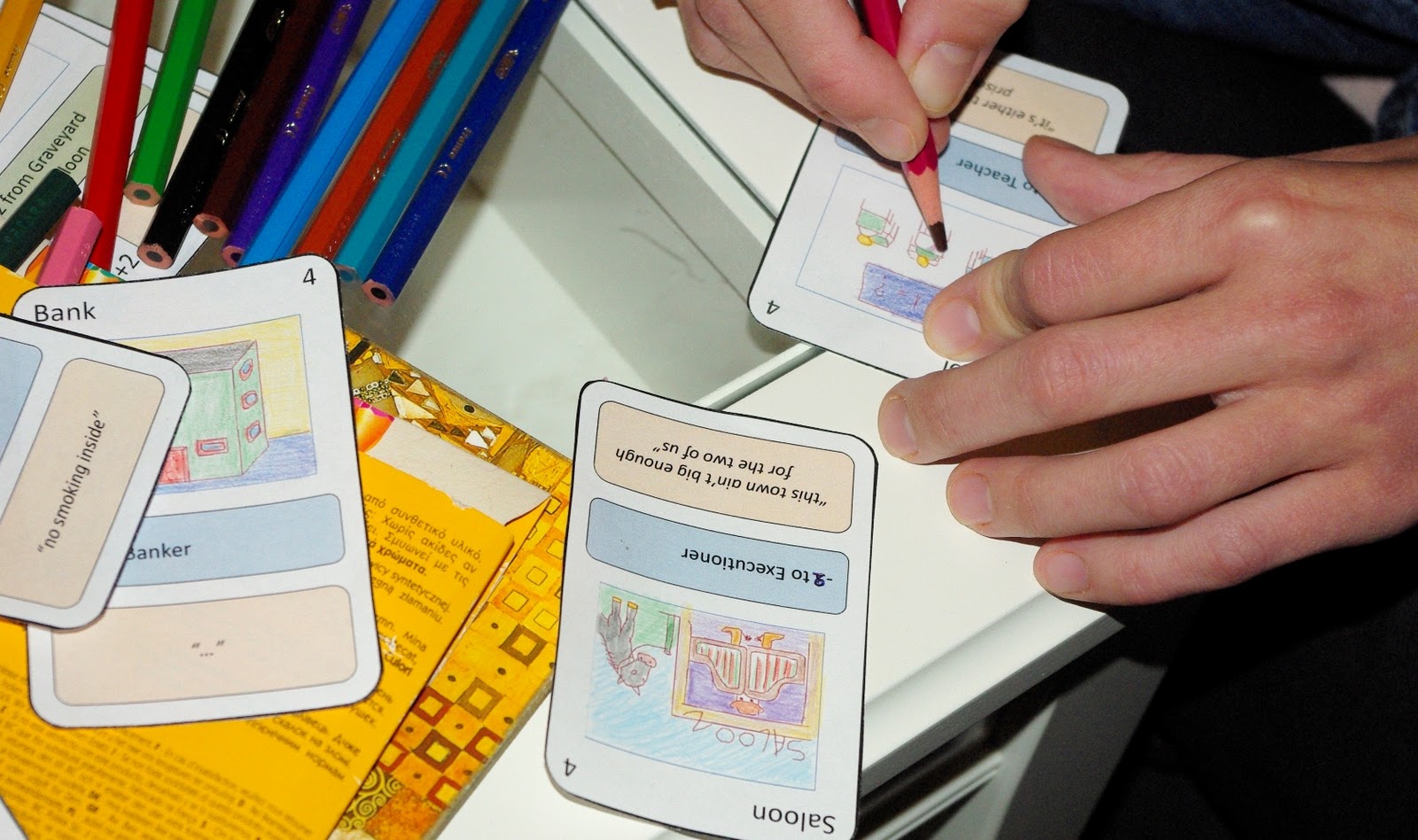
Tonight we finished doing the mechanichs and it was time to print and cut the cards:


... then we procedded to add color graphics:


here's a close-up of the "Saloon":

With the deck ready, we went to Sorin's place to get the electrical screwdriver. Once there, we naturally played a test game. For bidding, we used Twix candies:


One specific bidding round started small...

... and then got bigger ...


.... and even bigger ...

... in the end Sorin almost won the game but we left because it was getting late.

Tomorrow morning (which is actually soon) we leave for Essen where we will prepare our exhibition stand.
Cheers!